Discounted Microfilm Scanning, Microfiche Scanning, Aperture Card Scanning, and Imaging Services

Tag: microfilm scanning

The Timeless Value of Microfilm Scanning in the Digital Age

In a world where technology evolves faster than ever, there’s a growing need to preserve the past in ways that ensure it remains accessible for future generations. Enter microfilm scanning—a process that bridges the gap between the analog treasures of yesteryear and the digital convenience of today. While microfilm might seem like a relic of a bygone era, its contents hold the keys to invaluable historical, legal, and cultural information that can be lost if not preserved digitally.

Why Microfilm Matters

For decades, microfilm has served as the gold standard for archiving newspapers, legal documents, genealogical records, and rare books. Its compact, durable format was revolutionary for libraries, universities, and government institutions seeking long-term storage solutions. But with age, even the most resilient microfilm can deteriorate. Environmental factors, improper handling, and the sheer passing of time can cause irreversible damage.

Meanwhile, modern users demand instant access to information. Researchers, students, and professionals alike are no longer willing to sift through reels of film to find what they need. They expect searchable, shareable, and easy-to-access content at their fingertips. This is where microfilm scanning steps in to save the day, transforming static analog archives into dynamic digital resources.

The Benefits of Scanning Microfilm

Microfilm scanning is more than just a preservation method—it’s a way to unlock the full potential of archived materials. Here’s how:

  1. Preservation of Fragile Records: Every scan acts as a safeguard against the inevitable decay of the original material. Once digitized, records are no longer at risk from physical damage.
  2. Enhanced Accessibility: Digital files can be searched, indexed, and shared globally in seconds, making information far more accessible to wider audiences.
  3. Space Savings: Hundreds of reels of microfilm can be condensed into a single hard drive or cloud storage system, freeing up valuable physical space in archives and libraries.
  4. Disaster Recovery: Digital backups provide an insurance policy against fires, floods, and other disasters that could obliterate physical collections.

A Future-Proof Solution

As technology continues to progress, microfilm scanning also offers an innovative way to merge past and future. By using advanced Optical Character Recognition (OCR) software, digitized documents can become fully searchable, making it easier than ever to extract key information. AI-powered indexing tools can further classify and organize content, turning once-static archives into living, breathing databases.

Additionally, the move to digital aligns with sustainability goals by reducing the need for physical storage and energy-intensive environmental controls for preservation. Organizations that embrace microfilm scanning not only future-proof their collections but also make a commitment to eco-friendly practices.

Why Now?

The need for microfilm scanning has never been more urgent. As the demand for digital transformation accelerates across industries, those who act now can stay ahead of the curve. For libraries, museums, legal institutions, and private collectors, microfilm scanning is no longer optional—it’s a necessity.

By converting microfilm archives into digital assets, we’re not just preserving history; we’re empowering the future. With every scan, we build a bridge between the analog past and the digital future, ensuring that the stories, knowledge, and lessons of yesterday remain alive and accessible for generations to come.

Continue Reading

Scanning the Future: Trends and Innovations in the Microfilm Digitization Industry

microfilm scan

The Current Microfilm Scanning Industry: Bridging the Past and Future

The microfilm scanning industry has emerged as a pivotal player in the archival and information management sector, providing essential services that bridge the past and future of document preservation. Microfilm, a medium developed in the early 20th century, offered a revolutionary way to store vast amounts of data in a compact format. Today, as digital transformation sweeps across industries, microfilm scanning has become indispensable for organizations aiming to digitize historical records and ensure their longevity and accessibility.

Evolution and Importance of Microfilm

Microfilm was initially adopted for its ability to condense large volumes of documents onto film rolls, significantly reducing storage space requirements. Libraries, government agencies, and businesses utilized microfilm to archive newspapers, legal documents, and other critical records. However, the advent of digital technologies has rendered traditional microfilm less practical due to the challenges associated with accessing and sharing information stored in analog formats.

Microfilm Scanning Technology

Modern microfilm scanning technology leverages high-resolution scanners to convert microfilm images into digital formats. These advanced scanners can handle various types of microfilm, including 16mm and 35mm rolls, microfiche, and aperture cards. The process involves carefully feeding the microfilm through the scanner, capturing each frame, and converting it into a digital image. Optical character recognition (OCR) software can then be applied to make the digitized text searchable, greatly enhancing accessibility and usability.

Industry Applications and Benefits

The applications of microfilm scanning are vast and diverse. Libraries and archives use it to preserve historical newspapers, manuscripts, and rare books. Government agencies rely on it to digitize land records, legal documents, and vital statistics, ensuring long-term preservation and compliance with regulatory requirements. Businesses, especially those in finance and insurance, use microfilm scanning to convert client records and transactional documents into digital formats, streamlining operations and improving data retrieval.

The benefits of microfilm scanning are manifold. Digitization enhances the preservation of fragile documents by reducing the need for physical handling. It also improves accessibility, allowing users to search and retrieve information quickly and efficiently. Digital storage solutions offer scalability and cost-effectiveness, eliminating the need for expansive physical storage facilities. Moreover, digital archives can be easily backed up, ensuring data integrity and disaster recovery.

Challenges and Innovations

Despite its advantages, the microfilm scanning industry faces challenges, including the high cost of advanced scanning equipment and the labor-intensive nature of the process. Skilled technicians are required to handle delicate microfilm and ensure accurate scanning. Additionally, the quality of the original microfilm can affect the digitization outcome, necessitating careful handling and sometimes restoration.

Innovations in the field are addressing these challenges. Automated scanning systems and improved OCR technology are enhancing efficiency and accuracy. Cloud-based solutions are providing scalable storage and collaborative access to digital archives. Artificial intelligence (AI) is being integrated to improve image quality and metadata tagging, making digitized records more searchable and valuable.

The Future of Microfilm Scanning

The future of the microfilm scanning industry looks promising, with continued advancements in technology poised to further streamline the digitization process. As more organizations recognize the value of preserving historical records in digital formats, the demand for microfilm scanning services is expected to grow. This trend will likely drive further innovations, making the process more cost-effective and accessible to a broader range of institutions.

The microfilm scanning industry plays a crucial role in the preservation and accessibility of historical documents. By bridging the gap between analog and digital worlds, it ensures that valuable records from the past remain available and usable for future generations. As technology continues to evolve, the industry will undoubtedly adapt and thrive, cementing its place as an essential component of modern information management.

microfilm scan

Continue Reading

What is Duplex Roll Film Scanning?

Duplex roll film is 16mm microfilm that has been created with two images per frame. The front and backside of a document page was filmed at the same time as the front or they are simply two separate images side-by-side. There are around 5,000 frames on a 100-foot roll of 16mm duplex film, however once the pages get split it would be 10,000 separate images if split. Of course these are just estimates and longer film could contain a whopping 15,000+ frames (30,000+ images). Some documents were small to begin with, such as envelopes, checks, birth, death, and marriage certificates, driver’s licenses, fingerprints, and traffic tickets. In such cases rolls may contain double the expected amount (30,000-60,000 images)!

duplex microfilm

There are a handful of ways to scan duplex microfilm. Depending on how it was filmed, Generation Imaging can save both frames in one image, or save out two images separately. Advanced options include deleting out black backsides and making multi-page pdfs or tiffs based on blips or indexing fields.

Generation Imaging has a price discount for digitizing duplex rolls. This is because there are so many images on a roll, in some cases one roll has the same number of images of 2-4 common rolls. Keep in mind, the turnaround time for converting duplex microfilm will indeed be longer than standard 16mm rolls.

The bottom line is regardless of how duplex rolls were filmed, Generation Imaging will scan them so you won’t even know that a different technique was used; the end result is the same as other reels.

Feel free to contact us with any questions about your film.


Continue Reading

How Do You Scan 16mm Roll Film?

16mm roll film (also called microfilm) can be read under a microfilm viewer. However if you want a copy of the actual documents contained on the film, they have to be digitized. 16mm roll film can be scanned using a reader printer- which is usually performed one image a time and every time consuming. The quicker way is to use a roll film scanner. Microfilm scanners are a product in which the cost is in proportion to the quality of its output. In other words, if you buy an “affordable” scanner ($10,000 USD) the speed and quality can’t match a high end model ($50,000+). There are used microfilm scanners on the market, but they rarely come with a warranty. And like printers, scanners have shelf lives.

roll film

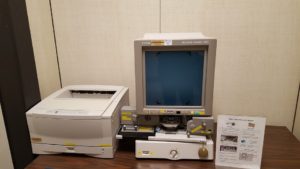
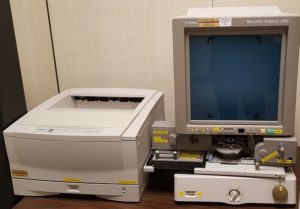
The old way- using a reader printer.

The solution Generation Imaging offers is a roll film scanning service. For pennies or a fraction of a penny, depending on the microfilm type, volume, and format, we can convert your 16mm roll film to PDF, TIF, or JPG files. The speed and quality are top notch because NextScan roll film scanners are used.

The thing you have to realize how microfilm scanning is that it is a specialized technology. It’s not plug and play, nor is it an off the shelf solution if you are a newbie. If you work for a company, organization, government agency, or are an independent researcher, nine times out of ten it is more cost effective and less of a headache just to send Generation Images your 16mm roll film to get if converted to digital images.

Once you have the images, you can upload them to your PC, server, make backups, or import them into your imaging software.

Continue Reading

Who Needs Microfilm Scanning? (Digitizing Roll Film)

Is Microfilm Still Used Today? What Is Microfilm Scanning?

roll film

It may surprise you that in the 21st century, organizations still use microfilm (also called roll film). There are a couple of reasons why microfilm is still relevant in this modern age of digitization.

Government Mandates

Many state, county, or federal government agencies demand that documents be archived on microfilm reels. It is easy to see why this is true. We have heard too many nightmare scenarios about digitized images and documents being lost due to accident. Indeed, it is a given that analogue media is “solid” and gives the impression that it could be accessed in the future easier than having the appropriate computer hardware and software to view specific file formats.

However, proponents of this philosophy ignore the inconvenient truths that microfilm actually degrades. If not stored in particular proper conditions, all microfilm could become brittle, start “melting”, smell like vinegar, fade, or become impossible to spool. Therefore, it makes perfect sense to scan your microfilm before it becomes unusable (and non-compliant with law).

It’s Always Been Done That Way

It’s possible an organization has been archiving or using their documents a certain way, dating back to the 1970s or beyond. Because things have always been done like this- and perhaps the fear of microfilm scanning costs- there could be a fear of change.

The counter argument to that is simple: having a company like Generation Imaging scanning roll film to tiff, pdf, or jpeg will save your organization time, space, and probably costs. Microfilm can become costly to store and difficult to manage and sort through. Digitizing your roll film makes your office more efficient. Indexed documents can be searched for and accessed in seconds instead of searching through hundreds of feet of roll film.

Please contact Generation Imaging today if you have:

Building Department microfilm
Police Department microfilm
Zoning and Planning microfilm
Environmental Protection microfilm
Public Works microfilm
Legal Department microfilm
Department of Health microfilm
Vital Records microfilm
Highway Department
Fire Department microfilm
Town Clerk microfilm
Student records microfilm
Social Services microfilm

and more…

Continue Reading