Discounted Microfilm Scanning, Microfiche Scanning, Aperture Card Scanning, and Imaging Services

Tag: digital image

Records Scanning and Old Microfilm Systems

Records scanning is closing a gap that widens as technology advances. A good way to view this is to compare requirements to use system before and after records scanning. By this I mean comparing a system that uses hardcopy format records and one that made use of records scanning and is all digital imaging.

Microfilm Archive  Uptimized by Records Scanning

A government office in Chicago Illinois is now in the process of converting harcopy documents to microfiche. This would not include records scanning because the documents are instead filmed and then place on microfiche. The microfiche retrieval system will create a hardcopy type system without the benefit of advanced technology. Records scanning is more in tune with computer and internet systems.

Faster and more efficient services has always lead the way. Records scanning fits right inline and serves the purpose of fulfilling this need. Records scanning enables advanced systems to take advantage of the digital images to provide a fully automated storage and retrieval system. Prior to records scanning, a microfilm system requires lots of human intervention that is much slower and more expensive to maintain. Nevertheless, some companies still need to maintain a microfilm system. But, sooner or later, records scanning will probably be considered, if not for efficiency, for safety issues. Microfilm has a limited life span as well. There are many other reasons for records scanning and the best way to become aware of this is to contact a professional.
 

Continue Reading

Computer Output Microfilm

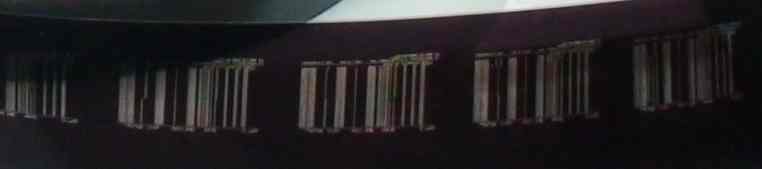
Computer Output Microfilm is the rarest of 16mm roll film types (ironically Computer Output Microfilm is a very popular form of microfiche). Because of the nature of most COM reels not having regular edges like normal 16mm roll film, converting COM rolls into digital image can be quite a challenge. Thankfully, Generation Imaging has tons of experience working with all kinds of Computer Output Microfilm.

COM microfilm

An example of Computer Output Microfilm

If the COM roll is blipped (small markers on the outside of the frames) and the frames have fixed sizes and are equidistant from each other, although the scanner operator must be highly experienced and the setup time is lengthy, it is theoretically possible to scan the Computer Output Microfilm without problems.

If the COM roll does not have blips, the highly skilled scanner operator must used advanced detection algorithms to attempt to find a sense area and setting to capture each frame by itself. Again, the Computer Output Microfilm must pretty much be perfect to pull this method off.

If none of the above methods will work, the expert scanner operator will have to scan the COM images as strips of frames. By padding an overscan and setting the backup, the operator can assure that no frame is missed. However this method requires post-processing: the frames must be manually cropped or split to create individual frames.

Generation Imaging offers scanning solutions for converting COM reels to PDF, TIFF, or JPEG. Please contact us today if you need this type of roll film to be converted to digital images.

Continue Reading

Info About Computer Output Microfilm and COM microfiche

Computer Output Microfilm is the process for transferring data from electronic media stored on computers to 16mm microfilm or microfiche.

What is the machine which creates this?  Using lasers and a processor, the data from the PC is copied to microfilm or microfiche. The fiche or film is then developed after it is exposed to light.

Computer Output Microfilm is used a solution for large organizations that want to see a reduction of paper.

It also provides away to preserve records for archival purposes.

Computer Output Microfilm and COM fiche can be converted to digital image via microfiche scanning, a service that Generation Imaging offers.

Digital images save even more space and takes COM systems to the next level, sort to speak.

Converting Computer Output Microfilm to digital image is useful for organizations who need:

  • computer printouts
  • reports, such as tax assessment documents, which have many pages
  • a large distribution of images is required
  • Images must be transferred or copied

By the way, I know how awkward it sounds to say Computer Output Microfilm and calling it COM fiche (which is similar to saying ATM machine). The correct terms should be Computer Output Microform, but hardly anyone in the industry uses microform (which can be microfiche, microfilm, or aperture cards). It could be why so many people get all three confused.

Anyway, please contact Generation Imaging for a COM microfiche scanning solution. G.I. scans all sorts of analog media, so don’t hesitate to ask us if we can help you in any way.

Continue Reading

Microfiche Scanning for Vehicle Manuals

Microfiche scanning is a technique to digitize analog fiche that contain owner manuals, parts manuals, repair manuals, and technical manuals for various vehicles, such as motorcycles, automobiles, snowmobiles, trucks, SUVs, vans, and others to digital image.

If you are a mechanic, hobbyist, owner, or researcher you may have noticed that getting manufacturer’s manuals for obscure and even popular manuals results in them sending you fiche. Well, how do you print a parts manual from microfiche? The quickest way is to send the fiche to Generation Imaging for microfiche scanning.


Microfiche scanning results in digital images, such as PDF, TIFF, or JPEG that you can print from, load on your computer, and actually read. Your other options are trying to locate an old fashioned microfiche viewer or reader printer.

Generation Imaging has a very special flat rate microfiche scanning cost if you have a handful of parts manuals on step-and-repeat microfiche.

Generation Imaging is located in Florida and received and sends microfilm via USPS, UPS, Fed-Ex, and other carriers. There have been no mail mishaps. So if you are are tired of running around trying to find a way to convert parts manuals on microfiche to digital image, please give G.I. a try with our microfiche scanning service. You won’t be disappointed in the quality or turnaround time, that’s for sure.

Generation Imaging’s crew has been in the microfiche scanning industry since the 1990s and has converted hundreds of thousands of step-and-repeat fiche that contain parts, instructions, and service manuals. There is no need for you to waste your personal time trying to figure out a way to go about this on your own.

Continue Reading

Digitize Negatives Could Help The National Archives

The National Archives hold information military service, family information, a personal history questionnaire, affidavits of comrades-in-arms, relatives, neighbors and medical, just to name some. Many of these files are in some form of negative microfilm. To digitize negatives and create digital files from this information will require a microfilm scanning conversion. Why would you want to digitize negatives? Well, by doing so, you can create an digital system that could hols all the information on computers. Organizations like these would like to digitize negatives but have not done so, in many cases, for monetary reasons.

Digitize Negatives Would Turn Microfilm Into Digital Files


Historians also like to digitize negatives because they spend a great deal of time researching records in libraries and going through books. When we digitize negatives, we create a file that is much more accessible than a hardcopy book. We Like helping historians and other people that like to look for old records, like people looking for ancestor’s information. After we digitize negatives from microfiche cards of microfilm rolls, their work becomes much easier and they appreciate it so much that they let you know about it.

After we digitize negatives, the digital files that are created can be viewed on one computer or multiple computers at the same time, depending on the network setup. Another benefit to digitize negatives is that digital images can be e-mail and shared through the internet just like any other digital picture. This really helps people that are interested in working on the same project but are not in the same location. If you an interest to digitize negatives for your own work, microfilm scanning can really help you.

Continue Reading